Cemented Carbide Composite Rolls for Rod, Wire & Rebar Mills
Kathuria Techmech supplies cemented carbide composite rolls for rod, wire, rebar and small-profile rolling mills in India. Choose from PC20–PC50 and KTPL grades for finishing, intermediate and slitting stands, with technical support for grade selection, grooving and assembly.
Available carbide grades offer different combinations of hardness, wear resistance, impact resistance and thermal performance. Selecting the appropriate grade depends on the rolling stand, material being processed, operating speed and mill conditions.
- Longer campaign life & better dimensional consistency
- Reduced roll changes and lower cost per tonne
- Expert support for Indian and export mills
Explore our composite roll grades, material properties, applications and technical support services to identify a suitable solution for your rolling mill.
WhatsApp Technical TeamWhat Are Cemented Carbide Composite Rolls?
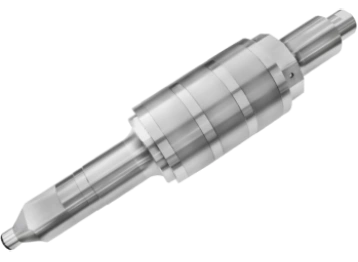
Cemented carbide composite rolls consist of tungsten carbide (cemented carbide) rings fitted onto a steel shaft. The carbide rings form the working surface and deliver high hardness and wear resistance, while the steel shaft provides strength and transmits rolling forces.
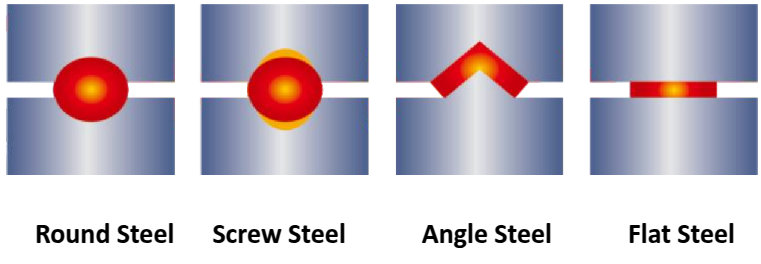
These rolls are widely used in the production of reinforcing bars (rebar), round bars, wire rod, square sections, flat steel, angles and other small profiles.
Composite rolls are used in the production of reinforcing bars, round bars, square sections, flat steel, angle sections and other rolled products.
Definition of Cemented Carbide Composite Rolls
A composite roll is manufactured by combining cemented carbide roll rings with a steel shaft. These rolls are used in the production of round bars, reinforcing bars, square sections, flat sections and other steel profiles.
Applications of Cemented Carbide Composite Rolls
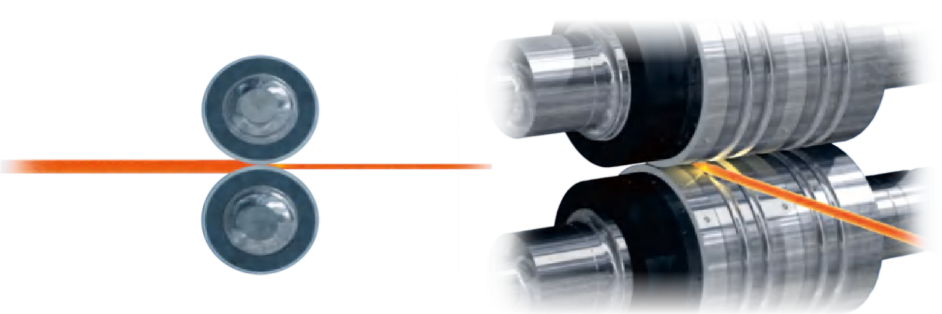
Cemented carbide composite rolls are suitable for intermediate stands in conventional bar mills, rod and wire mills, and high-speed wire mills operating at 2–50 m/s, subject to mill and roll specifications.
Traditional rod mills
They are used in finishing stands, pre-slitting stands and intermediate stands of traditional rod mills.

Wire Rod and Bar Mills
Used for the stands of finishing mills and intermediate rolling stands of rod and wire mills.

High-Speed Wire Rolling Mills
Composite rolls can be used in suitable intermediate stands of high-speed wire rolling mills. Correct roll grade selection and cooling practices are important for reliable performance.
Small-Profile Mills
These rolls can be used in pre-finishing and finishing stands for manufacturing angle steel, square sections, flat steel and other small structural profiles
Advantages of Composite Rolls
- Composite rolls can help improve rolled-product surface quality and dimensional consistency when correctly selected and maintained. They can help control negative dimensional tolerances more consistently.
- Appropriately selected composite rolls can reduce roll-groove change frequency, maintenance downtime, and manual workload. Increasing productivity and output can create greater economic benefit at the same time.
- Properly selected and maintained composite rolls can help improve dimensional consistency and reduce rolling defects, potentially supporting better product yield. Actual results depend on the steel grade, rolling process, roll design, and operating conditions.
- Reducing roll consumption and downtime can help lower the cost per tonne of rolled steel.
Material Composition and Grade Properties
Cemented carbide roll rings are primarily manufactured using tungsten carbide particles and a metallic binder phase, commonly cobalt. Some specialized grades may use nickel, chromium or combinations of metallic binders to achieve specific material characteristics.
The tungsten carbide particle structure, binder composition and manufacturing process influence properties such as hardness, transverse rupture strength, density, compressive strength and thermal conductivity.
Different grades are developed for different rolling conditions. Therefore, the appropriate grade should be selected based on the mill application and operating requirements.
Special Cemented Carbide Roll Rings Series
| Grade | Chemical Composition | Physical and Mechanical Properties | ||||||||
|---|---|---|---|---|---|---|---|---|---|---|
| WC(%) | Co+Ni+Cr (%) | Density g/cm³ | Hardness HRA | TRS N/mm² | Compressive Strength N/mm² | Young's modulus KN/mm² | Thermal Conductivity | |||
| PC20 | 77 | 23 | 13.25 | 83 | 2950 | 3100 | 450 | 70 | ||
| PC30 | 74 | 26 | 13 | 81.6 | 2920 | 2900 | 450 | 69 | ||
| PC40 | 70 | 30 | 12.65 | 80.9 | 2871 | 2700 | 400 | 61 | ||
| PC50 | 68 | 32 | 12.48 | 79.2 | 2700 | 2320 | 400 | 60 | ||
Special cemented carbide roll rings series: Featuring an optimized tungsten carbide structure, these roll rings are designed to resist hot cracking and are intended for suitable finishing stands in rebar, rod, and wire rolling mills, which can greatly increase the single-pass rolling tonnage, reduce manual intervention and improve production efficiency efficiency and obtain better economic benefits.
| Grade | Applications |
| PC20 | Offers good impact resistance and resistance to hot cracking; suitable for the front stands of finishing mills, subject to operating conditions. |
| PC30 | Good wear resistance and hot cracking resistance, used in the stands of pre-finishing rolling mills for hot rolling rebar. |
| PC40 | Good impact resistance and hot cracking resistance, used in round bar finished products and rebar stands. |
| PC50 | Good impact resistance and hot cracking resistance, used in round bar finished products and rebar stands. |
General-Grade Cemented Carbide Roll Rings
| Grade | Chemical Composition | Physical and Mechanical Properties | ||||||||
|---|---|---|---|---|---|---|---|---|---|---|
| WC(%) | Co+Ni+Cr (%) | Density g/cm³ | Hardness HRA | TRS N/mm² | Compressive Strength N/mm² | Young’s modulus kN/mm² | Thermal Conductivity | |||
| KTPL25R | 75 | 25 | 13.03 | 79.5 | 2600 | 3100 | 446 | 66 | ||
| KTPL30R | 70 | 30 | 12.73 | 79 | 2600 | 3000 | 425 | 57 | ||
General-Grade Cemented Carbide Roll Rings: These grades use a Co-Ni-Cr binder phase system designed to provide wear resistance and corrosion resistance.
| Grade | Applications |
| KTPL25R | Good impact resistance, used in round bar finished and before the finished product stands. |
| KTPL30R | Good impact resistance, used in round bar finished and before the finished product and the slitting stands. |
Construction of Cemented Carbide Composite Rolls
A cemented carbide composite roll consists of carbide roll rings assembled with a steel shaft. The assembly method is important for maintaining the required fit and mechanical stability during rolling operations.
Kathuria Techmech provides information on hydraulic axial compression assembly technology. In this method, hydraulic force is applied through a suitable nut and assembly arrangement to generate the required axial compression and secure the roll components to the shaft.
The design and assembly parameters should follow the manufacturer's engineering specifications to ensure safe installation and reliable operation. The steel shaft may be reused where its condition and design permit.
Technical Support and Services
- Service is available for the design, groove and notches machining of cemented carbide composite rolls
- Machining tools are available to support the processing of cemented carbide composite rolls.
- Assembly methods can be tailored to the customer's roll design and operating requirements.
- Various cemented carbide roll rings are available with diameters of 300–450 mm diameter and thickness of 30-250 mm for stands of bars and wires.

